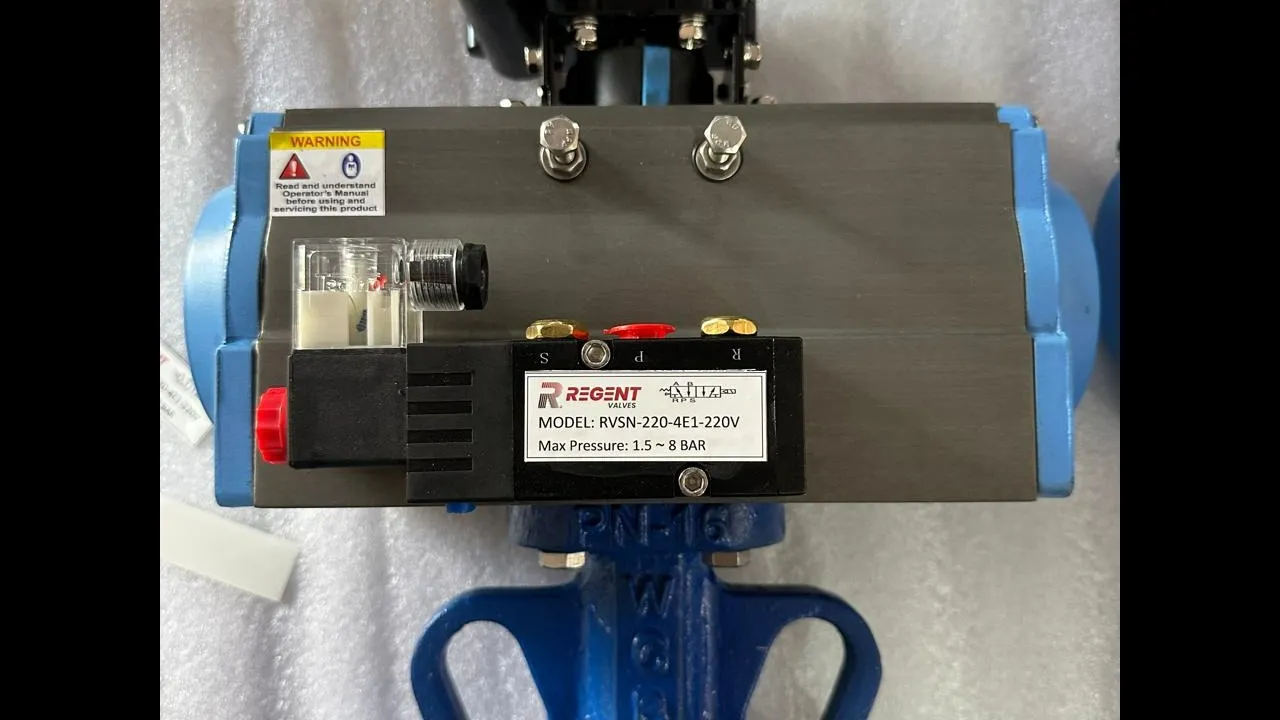
A 5/2 Namur solenoid valve is the industry standard for controlling double-acting pneumatic rotary actuators. Its specific design allows for seamless integration and precise control over the opening and closing cycles of process valves.
Understanding the 5/2 Namur Solenoid Valve
The term 5/2 refers to the valve having 5 ports and 2 positions. In a double-acting system, this configuration is essential because it directs pressurized air to one side of the actuator's piston while simultaneously venting the air from the opposite side.
- Port 1: Air Supply (Input).
- Ports 2 & 4: Outlet ports that connect directly to the actuator chambers.
- Ports 3 & 5: Exhaust ports (usually fitted with silencers to prevent debris entry and reduce noise).
Regent's manufacturing focus on the NAMUR standard (VDI/VDE 3845) ensures that their 5/2 valves are not just compatible, but optimized for rotary actuators. Here is why they are the perfect choice:
1. Direct Mounting Interface
Regent valves feature a standardized 'Namur' footprint. This allows the valve to be bolted directly onto the actuator's intake/exhaust face.
- Benefit: Eliminates the need for external tubing, fittings, or mounting brackets. This reduces the risk of air leaks and significantly lowers installation time.
2. Optimized for Double Acting Cycles
Double-acting actuators require air pressure for both the 'opening' and 'closing' strokes. Regent’s 5/2 design ensures a high flow rate for rapid response, ensuring that your rotary actuator (whether rack-and-pinion or scotch-yoke) operates with consistent torque in both directions.
3. Industrial Durability
Regent typically utilizes Anodized Aluminum bodies and high-grade NBR or Viton seals.
- Resistance: These materials are resistant to the corrosive environments often found in chemical processing or oil and gas facilities.
- Protection: Most Regent models come with an IP65 or IP67 rating, meaning they are protected against dust and low/high-pressure water jets.
4. Performance Features
- Manual Override: Most Regent Namur valves include a manual override button. This is critical for testing the actuator during installation or operating the valve during a power failure.
- Low Wattage Coils: Designed for continuous duty with minimal heat generation, which extends the life of the solenoid and saves energy.
Keywords